On 25–26 March, the cyber defence exercise “Locked Shields 2026 Partners’ Run” took place, where a joint team of the University of Tartu and the Estonian Defence League’s Cyber Defence Unit achieved first place for the second consecutive year. The exercise was organised by the NATO Cooperative Cyber Defence Centre of Excellence (CCDCOE).
The exercise serves as the official preliminary run of the international large-scale cyber defence exercise “Locked Shields 2026”, bringing together experts from academia, industry and the defence community. A total of 16 teams participated in the exercise.
According to Ivar Koppel, Head of the High Performance Computing Center at the University of Tartu, the number of participants has increased year by year, offering the centre’s staff valuable opportunities to practise coordination and teamwork in crisis situations. “It is particularly rewarding to do this together with strong partners from different organisations,” said Koppel.
The joint team of the University of Tartu and the Estonian Defence League’s Cyber Defence Unit was led by Second Lieutenant Andres Jõgi, who noted that the team’s strength in recent years has been thorough preparation. “Although the two-day exercise took place at the end of March, the leadership team began preparations already in December of the previous year. This enabled us to prepare more than 120 participants from over twenty companies and public sector organisations,” explained Jõgi, adding that Estonia has gained more than 120 specialists who have experienced first-hand how to respond to cyber incidents side by side.
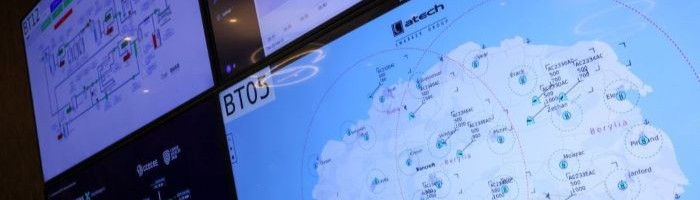
During the exercise, teams were required to defend a simulated national infrastructure against approximately 6,000 cyberattacks. Realistic, high-intensity crisis scenarios were played out, requiring responses to attacks targeting energy networks, communication systems, and other critical services, as well as dealing with political pressure, disinformation campaigns, and infrastructure crises. This year’s exercise also included new elements, such as an expanded cloud-based infrastructure segment and a separate election system.
In addition to technical defence, participants had to simultaneously coordinate legal response, strategic communication and national-level decision-making processes. Achieving success required strong performance across all these areas.